
When most people think about chiropractic care, they think about pain relief.
Perhaps you have low back pain after spending too much time at your desk. Maybe your neck feels stiff after a long day at work. Or you have an old injury that seems to flare up whenever you become more active.
These are common reasons people seek chiropractic care—and helping patients manage musculoskeletal pain is an important part of what chiropractors do.
But chiropractic care doesn’t have to be viewed solely through the lens of pain.
At Back to Life Chiropractic, LLC in Gibsonia, PA, we believe it’s also important to consider how well your body moves and functions. Your ability to bend, rotate, walk, exercise, work, play with your children, participate in sports, and enjoy everyday activities can all be important measures of your physical well-being.
A chiropractic adjustment is one tool that may help support healthy movement and function. When appropriate, it can be part of a broader approach to maintaining an active lifestyle—not simply something you seek out when you’re hurting.
What Is a Chiropractic Adjustment?
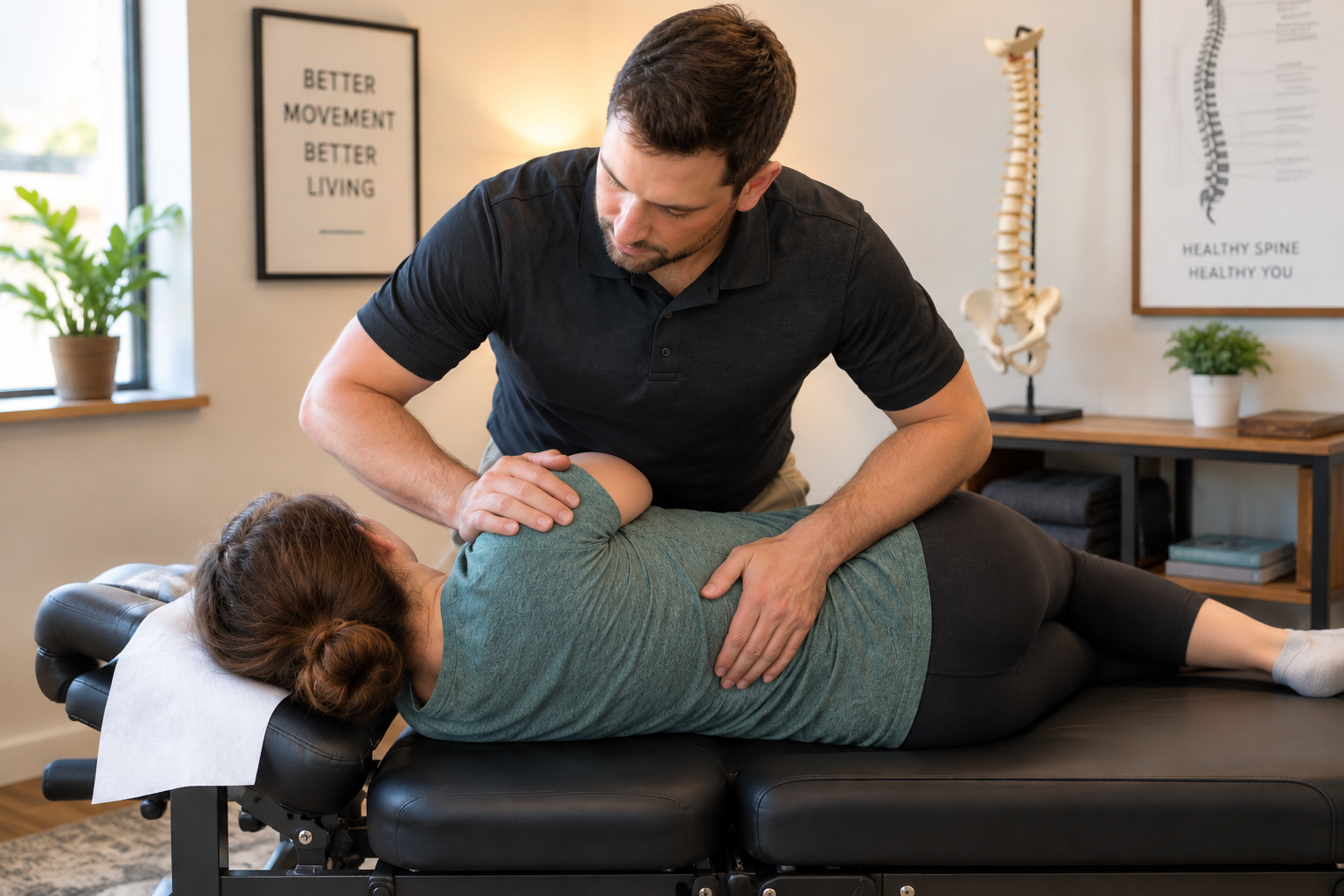
A chiropractic adjustment, sometimes called spinal manipulation, involves applying a controlled force to a joint.
Chiropractors commonly use adjustments as part of care for certain musculoskeletal conditions, particularly problems involving the spine. The goal is generally to influence joint movement and function.
Your spine is made up of many individual vertebrae and joints that work together. Normal movement requires these structures, along with surrounding muscles and other tissues, to work in coordination.
When a joint becomes stiff or its movement is altered, you may notice discomfort, restricted movement, or difficulty performing certain activities.
An adjustment may be used to help address these types of movement restrictions.
It’s important, however, to maintain realistic expectations. An adjustment isn’t a cure-all, and chiropractic care isn’t appropriate for every condition. A thorough evaluation is an important first step in determining whether chiropractic care is appropriate for you.
Pain Is Only One Measure of Physical Function
Pain is an important signal from your body, but it doesn’t tell the entire story.
Two people can have similar levels of pain and very different levels of physical function. Likewise, someone may have relatively little pain but notice that they’re becoming increasingly stiff or avoiding activities they once enjoyed.
That’s why it’s useful to consider questions beyond simply, “Does it hurt?”
For example:
- Can you move comfortably through your normal range of motion?
- Can you exercise the way you’d like?
- Are you avoiding certain activities because your body doesn’t feel as capable as it used to?
- Do you have difficulty sitting, standing, bending, or turning?
- Are everyday activities becoming more challenging?
- Do you feel limited by stiffness or reduced mobility?
These questions help shift the conversation from simply managing symptoms to considering function.
Supporting Healthy Movement and Mobility

One potential benefit of chiropractic adjustments is supporting joint mobility.
Mobility is important for virtually everything we do. Walking, reaching, lifting, rotating, bending, and even maintaining balance all require different parts of your musculoskeletal system to move together.
For some people, joint stiffness can make certain movements uncomfortable or difficult. Chiropractic care may be used to help improve movement in appropriate patients.
This doesn’t mean that your spine needs to be “put back into place” every time you experience stiffness. The human body is more adaptable and complex than that.
Instead, chiropractic care can focus on identifying areas where movement or function may be limited and determining whether an adjustment or other conservative approach may be helpful.
Helping You Stay Active
One of the most valuable aspects of physical health is being able to participate in the activities that matter to you.
Maybe that’s walking around your neighborhood, playing golf, going to the gym, gardening, hiking, lifting weights, playing with your grandchildren, or participating in a favorite sport.
When discomfort or restricted movement interferes with those activities, it can become tempting to do less.
Unfortunately, doing less can sometimes contribute to further deconditioning and loss of strength or mobility.
For appropriate patients, chiropractic care may be one component of a broader plan designed to help them move comfortably and remain active.
That doesn’t mean an adjustment replaces exercise. In fact, exercise and physical activity remain important components of maintaining strength, mobility, cardiovascular health, and overall physical function.
Chiropractic care and exercise can complement one another.
Chiropractic Care and Exercise

Think of an adjustment as one tool in your toolbox.
Exercise may help build strength and endurance. Mobility exercises can help maintain flexibility and movement. Proper technique can help you perform activities more efficiently. Adequate rest and recovery give your body an opportunity to adapt.
A chiropractic adjustment may address another part of the picture for an appropriate patient.
For someone who exercises regularly, chiropractic care may be incorporated into a broader strategy focused on maintaining mobility and function.
For someone who has become less active because of discomfort, care may focus on helping that person return to appropriate activity.
The specific approach should depend on the individual, their goals, and their clinical situation.
Improving Awareness of Your Body
Another benefit of working with a chiropractor can be learning more about how your body moves.
Most of us don’t spend much time thinking about our movement patterns until something goes wrong.
During an evaluation, you may become more aware of differences in mobility, areas of stiffness, activities that aggravate symptoms, or movements that feel different from one side of your body to the other.
That information can be useful.
The goal of chiropractic care shouldn’t simply be to have someone adjust you and send you on your way. Understanding your body and learning how to take care of it can be an important part of a successful long-term approach.
Everyday Physical Stress Matters

You don’t have to be a professional athlete to place physical demands on your body.
Consider a typical day.
You might spend several hours sitting at a computer, drive to work, carry groceries, lift a child, perform household chores, stand for extended periods, and then exercise in the evening.
None of these activities are necessarily harmful. In fact, regular movement is generally beneficial.
But your body still has to adapt to these demands.
When physical demands, recovery, sleep, activity levels, and other factors aren’t well balanced, you may begin to notice stiffness or discomfort.
Chiropractic care can be one part of a comprehensive approach to managing these everyday physical demands.
What About Chiropractic Care When You Aren’t in Pain?
This is an important question.
You don’t necessarily need to be in pain to become interested in your musculoskeletal health. However, that doesn’t mean everyone needs regular chiropractic adjustments simply as a preventive measure.
Instead, it may be helpful to think about chiropractic care in terms of your individual needs and goals.
If you’re experiencing stiffness, changes in mobility, difficulty performing activities, or a musculoskeletal problem, an evaluation can help determine whether chiropractic care may be appropriate.
If you’re currently feeling well, maintaining your physical health through regular exercise, appropriate strength training, good sleep, healthy nutrition, and other healthy habits remains important.
Chiropractic care can be considered within that larger picture when there is a specific reason for it.
What Chiropractic Adjustments Can—and Can’t—Do
It’s important to have realistic expectations about chiropractic care.
Research supports spinal manipulation as one treatment option for certain types of musculoskeletal pain, particularly some forms of low back and neck pain. However, chiropractic adjustments aren’t appropriate for every condition, and they shouldn’t be presented as a treatment for unrelated diseases or as a replacement for necessary medical care.
An adjustment also doesn’t eliminate the need for exercise, healthy movement habits, or other aspects of maintaining physical health.
At Back to Life Chiropractic, our goal is to evaluate each patient as an individual and develop an approach that makes sense for their particular needs.
Sometimes chiropractic care may be appropriate. Sometimes another type of healthcare or treatment may be more appropriate. Knowing the difference is an important part of responsible patient care.
A More Complete View of Chiropractic Care

Pain is often what gets someone through the door, but the larger goal may be getting back to the things that matter.
Maybe you want to exercise without constantly worrying about your back.
Maybe you want to turn your head comfortably while driving.
Maybe you want to get through your workday without feeling stiff.
Maybe you want to return to a favorite recreational activity.
Or perhaps you simply want to understand why your body isn’t moving the way it used to.
Those goals are about more than pain. They’re about movement, function, and quality of life.
Chiropractic adjustments can be one part of addressing those concerns when they are clinically appropriate. Combined with physical activity, strengthening, mobility work, healthy lifestyle habits, and appropriate medical care when necessary, chiropractic care can fit into a comprehensive approach to musculoskeletal health.
Take the Next Step
If you’re experiencing pain, stiffness, reduced mobility, or difficulty doing the activities you enjoy, you don’t have to wait until the problem becomes more disruptive before looking for answers.
Dr. Tsai at Back to Life Chiropractic, LLC in Gibsonia, PA, can discuss your concerns, perform an initial evaluation, and help you understand whether chiropractic care may be appropriate for your situation.
Contact Back to Life Chiropractic, LLC for more information or to schedule your initial evaluation.
Your goal isn’t simply to feel better.
It’s to get back to living your life.